MOD-01
FOUNDATION
Python for Data Science
Memory models, list comprehensions, NumPy vectorization, broadcast mechanics, and structured arrays.
Read SyllabusA student-driven technical community building, learning and experimenting with AI and machine learning.

Surface-level tutorials cannot prepare engineers for production reality. We enforce mathematical foundations, zero-dependency algorithm rebuilds, strict peer review, and continuous deployment.
Mastering matrix calculus, eigenvalues, probability distributions, gradient descent convergence, and loss function geometry before invoking high-level frameworks.
Implementing fundamental algorithms from scratch—linear regression, k-nearest neighbors, naive Bayes, and multilayer perceptrons—using pure Python and analytical calculus.
Accelerating architectures with PyTorch tensors, autograd, GPU acceleration, and Scikit-Learn pipelines. Training reproducible models with strict cross-validation.
Packaging model weights into ONNX runtimes, building sub-20ms FastAPI microservices, implementing token streaming, and containerizing pipelines for Kubernetes deployment.
Every student pull request undergoes automated linting, test coverage checks, and rigorous review by club technical leads before merging into production.
Publishing benchmark studies, dataset releases, Colab tutorials, and reusable starters to empower the next generation of engineers across Central India.
Curated syllabus spanning foundational Python to advanced frontier models. Every module includes theory notebooks, exercises, and evaluation criteria hosted in our open repository.
Memory models, list comprehensions, NumPy vectorization, broadcast mechanics, and structured arrays.
Read SyllabusLinear algebra (SVD, PCA), multivariate calculus (Jacobians, Hessians), probability distributions, and Bayes theorem.
Read SyllabusPandas & Polars, missing value imputation strategies, categorical encoding, Outlier bounds, and Seaborn visualization.
Read SyllabusOrdinary Least Squares, Ridge/Lasso, Logistic regression, SVMs, Decision Trees, Random Forests, and XGBoost.
Read SyllabusMultilayer perceptrons, backpropagation equations, activation functions, optimizers (AdamW, SGD with momentum), and PyTorch tensors.
Read SyllabusConvolutions, pooling, ResNet residual blocks, transfer learning, object detection with YOLO, and real-time OpenCV streams.
Read SyllabusTokenization, TF-IDF vectors, Word2Vec embeddings, sequence modeling with LSTMs, and sentiment classification.
Read SyllabusScaled dot-product self-attention, multi-head attention, positional encodings, BERT, GPT decoder architectures, and quantization.
Read SyllabusDense vector embeddings, pgvector, hybrid BM25 + dense search, semantic chunking, and verifiable grounded prompt generation.
Read SyllabusModel serialization, FastAPI inference endpoints, Docker multi-stage builds, model drift monitoring, and batch processing.
Read SyllabusMarkov Decision Processes, Bellman optimality, Q-learning, Policy Gradients, and tool-augmented autonomous LLM agents.
Read SyllabusPaper replication standards, algorithmic fairness auditing, bias mitigation, ablation studies, and IEEE/arXiv paper authoring.
Read Syllabusgit clone https://github.com/AIMLCLUBOCT/Workshops.git
Fundamental vector operations, memory allocation benchmarks, array broadcasting, and clean data wrangling on real academic datasets.
Linear regression, logistic classifiers, decision boundaries, ROC-AUC curves, and cross-validation grids using Scikit-Learn.
Writing custom `nn.Module` classes, understanding automatic differentiation via `loss.backward()`, learning rate schedulers, and image classification.
Text normalization, subword tokenizers, TF-IDF matrix transformations, Naive Bayes vs. pre-trained HuggingFace transformers.
Production-grade systems created by OCT engineers. Every project includes automated test coverage, modular pipelines, and zero-dependency mathematical fallbacks.
The Threat: Collegiate networks frequently suffer credential harvesting attacks targeting university student portals and fee gateways.
The Solution: A dual-mode text classifier using TF-IDF tokenization combined with Multinomial Naive Bayes. Includes a pure Python zero-dependency mathematical fallback module for offline embedded devices.
The Problem: Identifying at-risk engineering undergraduates before end-of-semester university examinations allows early academic intervention.
The Solution: A tabular regression and classification model analyzing internal assessment scores, laboratory attendance, and study hours. Features an analytical gradient descent fallback engine.
The Problem: Industrial manufacturing and campus construction sites require strict personal protective equipment compliance to prevent injuries.
The Solution: Fine-tuned YOLOv8 neural network trained on hard-hat and vest datasets, optimized with ONNX Runtime to maintain 45 FPS on edge video streams.
The Problem: University syllabi, exam rules, and college notifications span hundreds of unstructured PDF pages, making student inquiry tedious.
The Solution: Hybrid BM25 keyword + dense vector semantic retrieval system over official OCT documents with citation tracking and hallucination guardrails.
Moving beyond theoretical speculation. Our student researchers conduct empirical replications, model quantizations, and inference efficiency audits.
Quantizing ResNet-50 and YOLOv8 weights from FP32 to INT8 via ONNX Runtime to evaluate mAP degradation against inference frame rate gains on low-power Intel Celeron and Raspberry Pi edge devices.
Evaluating 33-point pose landmark estimation drift under fluctuating ambient illumination (50–300 lux) and classroom desk occlusions for student posture analysis.
Comparing parameter-efficient fine-tuning (LoRA rank=8, alpha=16) against full backpropagation on Llama-3-8B for campus ordinance question answering on 1x 16GB GPU.
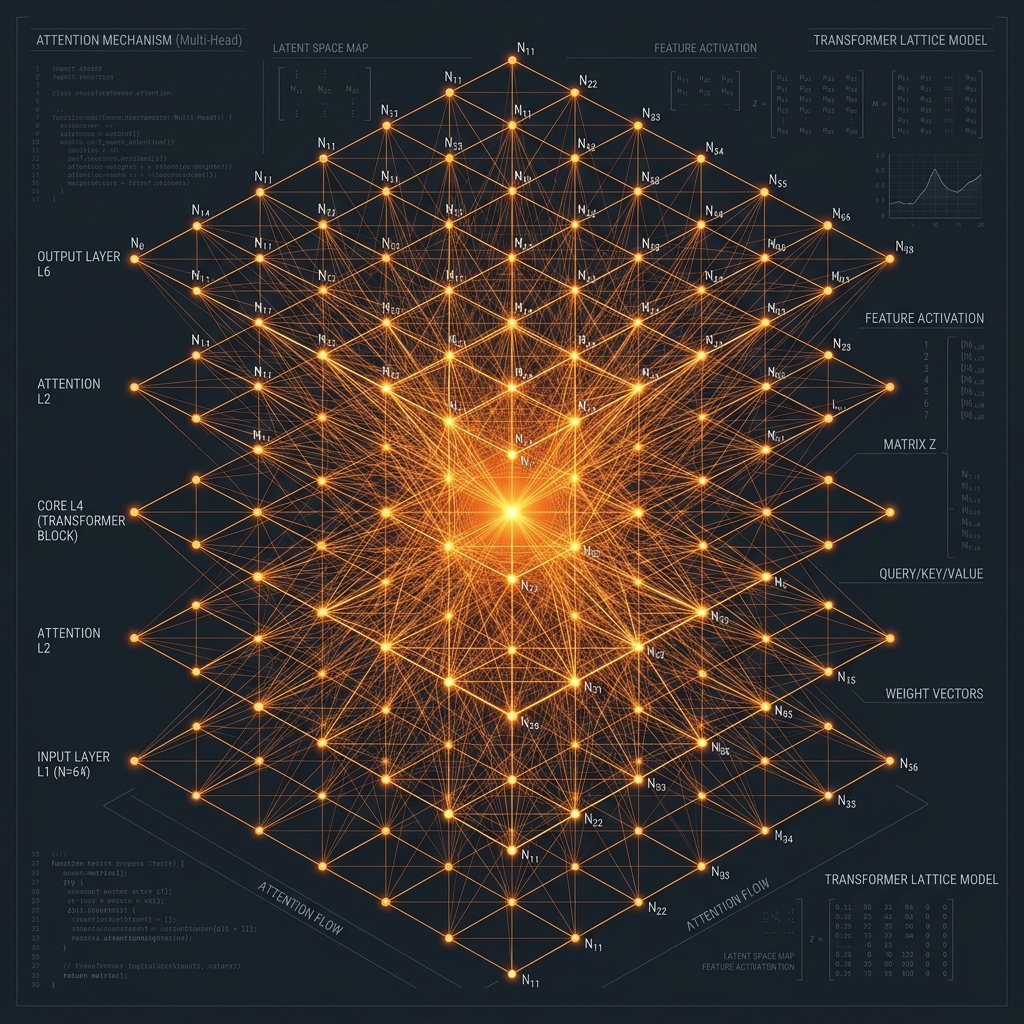
Students dissect the mathematical core of the Transformer architecture: query-key-value projections Attention(Q, K, V) = softmax(QK^T / sqrt(d_k))V, causal masking matrices, rotary position embeddings (RoPE), and KV-caching memory profiles for real-time edge execution.
Whenever an organizer schedules a workshop, a student commits an open-source project blueprint, or new learning materials are published, it appears right here in real-time. Students can also propose their own activities directly.
From technical aptitude challenges to deep-learning bootcamps. Historical records of hands-on sessions conducted at Oriental College of Technology, Bhopal.
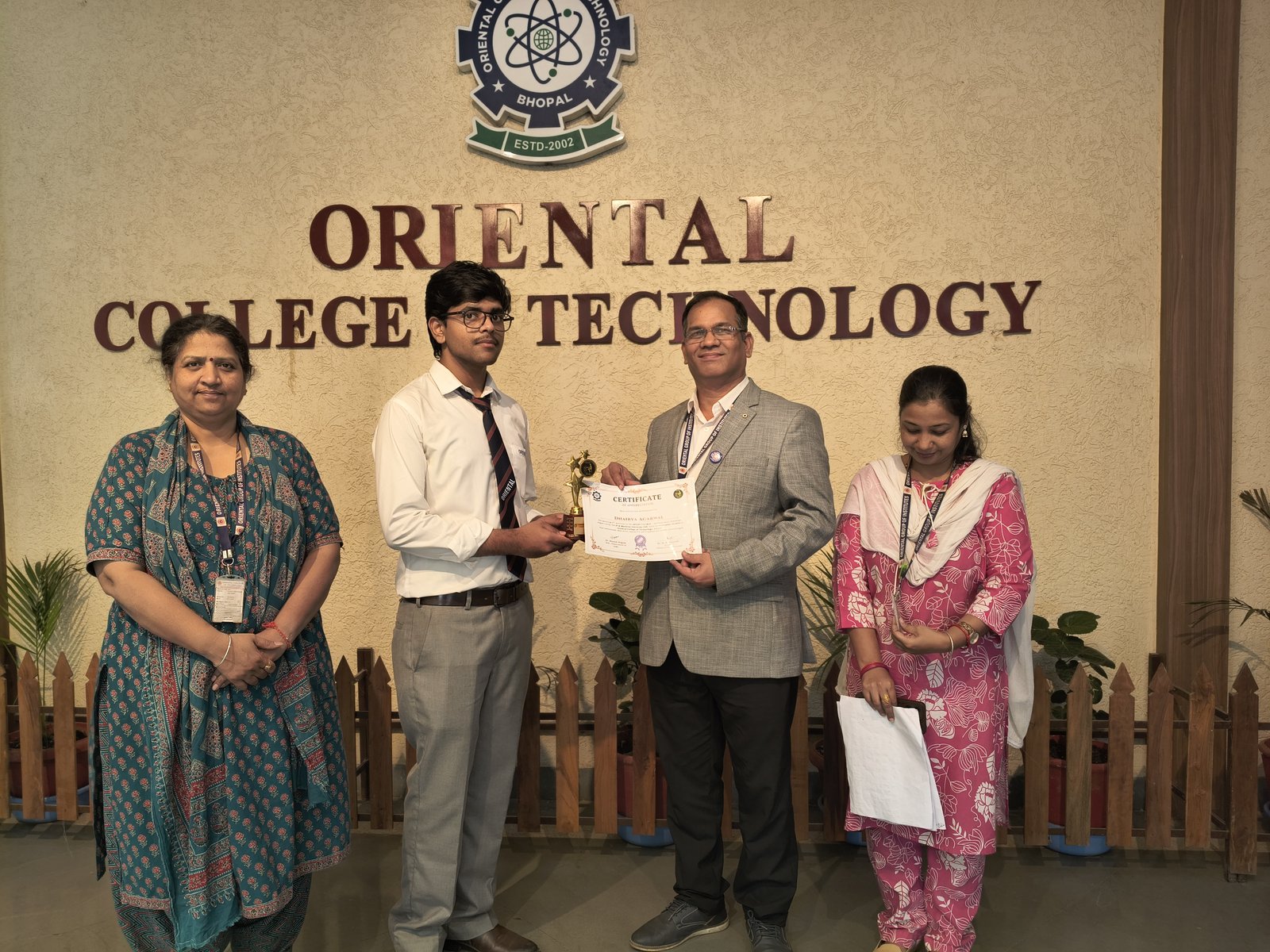
The flagship second edition of Aptify featuring advanced technical aptitude, algorithmic reasoning rounds, and a grand felicitation ceremony honoring campus winners with certificates and accolades.
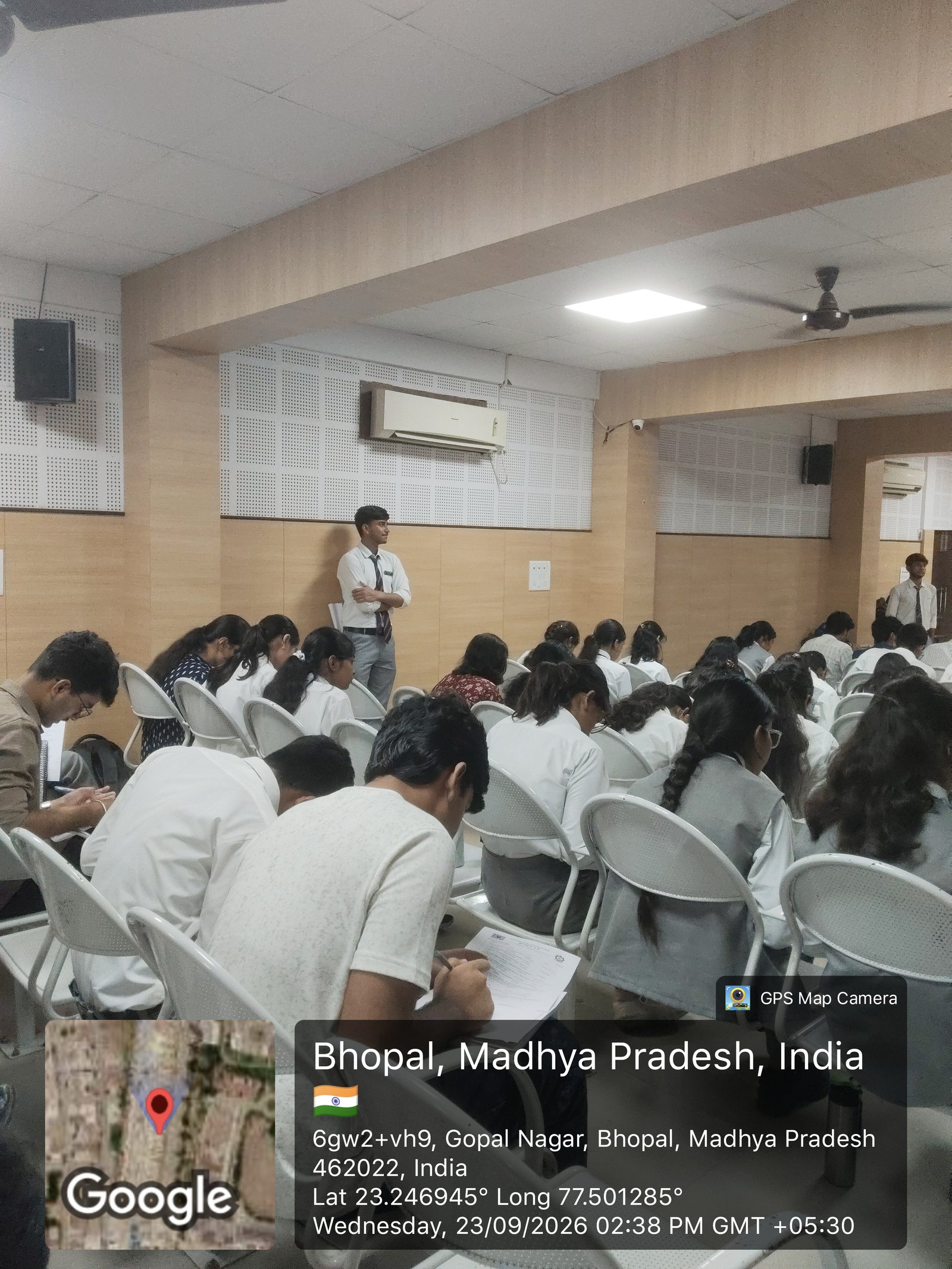
Annual technical convention showcasing student innovations, model demonstration booths, and research poster presentations across AI & Machine Learning.
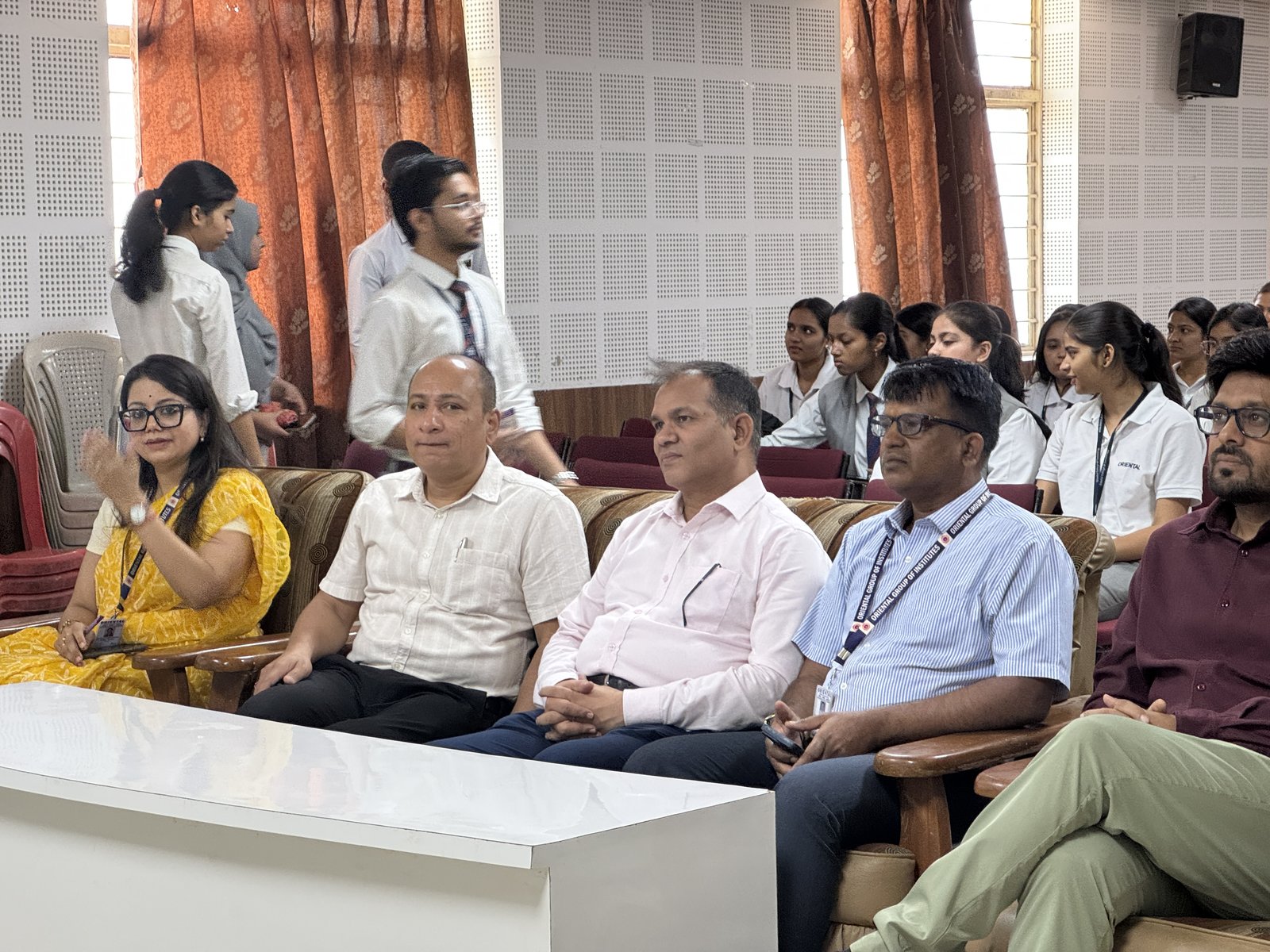
Official onboarding session for newly inducted executive council and wing leads. Presentation of 2026 development roadmap, Git workflows, and event calendars.
Hands-on session introducing modern web architecture, CMS deployment, DNS management, and custom endpoint integrations for college technical societies.
Deep-dive into Markov Decision Processes, policy gradient theorem, reward engineering, and autonomous robotics applications presented by senior industry practitioners.
Intra-college competitive programming tournament testing algorithmic efficiency, dynamic programming, tree traversals, and Python mathematical problem-solving.
Comprehensive challenge assessing numerical aptitude, pattern recognition, and computational thinking for engineering pre-final and final year candidates.
Intensive 3-day practical bootcamp covering Python fundamentals, NumPy vectorization, exploratory data analysis, and predictive modeling for engineering students.
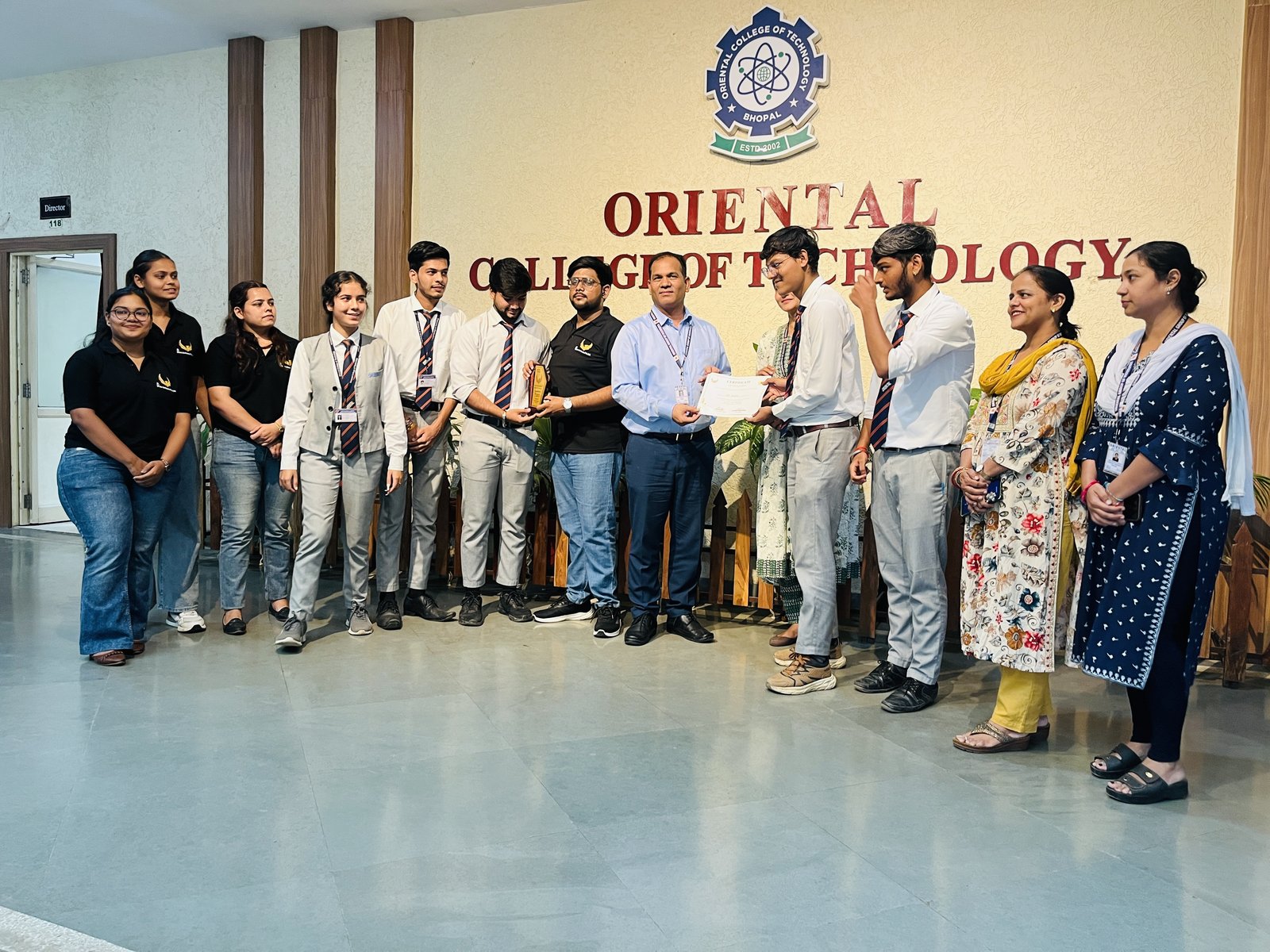
Data Structures & Programming Logic bootcamp focusing on recursion, pointer mechanics, stack/queue paradigms, and practical Python implementations.
Introductory symposium laying the foundation for mathematical abstraction and clean procedural design in modern high-level languages.
Interactive dialogue on corporate engineering standards, clean architecture, software engineering hiring patterns, and technical resume development.
Foundational assembly inaugurating the club charter, unveiling the student council, and establishing research partnerships with Oriental Group leadership.
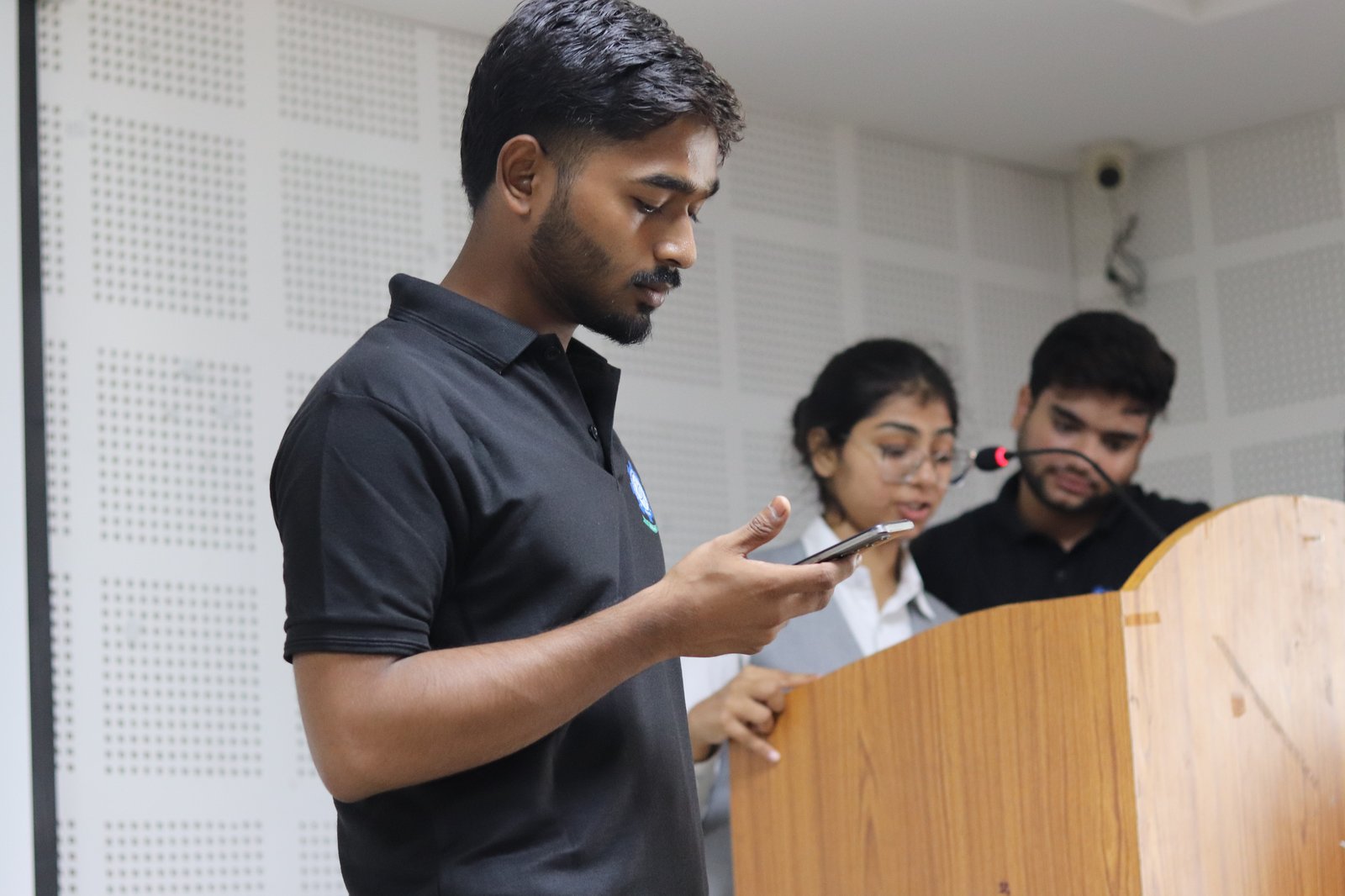
High-resolution visual evidence of campus operations, student award felicitations, competitive programming hackathons, and laboratory environments at OCT Bhopal. Click any photograph to inspect full-screen.
The flagship campus facility housing computer science laboratories, high-compute setups, and seminar halls.
Student winners honored on stage with technical trophies, certificates, and recognition by the core council.
Engineering students actively competing in computational logic, pattern recognition, and live problem-solving.
Intensive student lab sessions covering NumPy vectorization, exploratory data analysis, and machine learning pipelines.
Foundational assembly inaugurating the club charter, induction of the core team, and faculty keynote.
Student technical symposium, applied machine learning project demonstrations, and campus tech exhibits.
Access original high-resolution photo galleries from the 10–12 Sep DSPL Bootcamp, Codify sprints, SnapCode rounds, and founding inauguration albums directly on Google Drive.
Meet the faculty coordinators, executive leadership, and wing architects driving daily research, operations, and workshops at Oriental College of Technology.
All curriculum roadmaps, Colab labs, production microservice blueprints, and event logs are openly licensed under MIT across the AIMLCLUBOCT organization.
The primary 12-module open-source curriculum spanning NumPy, Calculus, Scikit-Learn, PyTorch, Transformers, and MLOps.
Hands-on Google Colab notebooks tailored for live student bootcamps with 1-click cloud execution.
Curated starter projects, fallbacks, and production-grade architectures with good first issues for contributors.
Standardized blueprints for ML microservices, Docker inference containers, evaluation benchmarks, and issues.
Centralized archive of all club hackathons, workshops, bootcamps (Aptify 2.0, Codify, SnapCode) with schedules and outcomes.
Organization-wide governance, community health profiles, constitution, code of conduct, and contribution workflows.
Artificial intelligence is not a passive spectator sport. Whether you are in your first semester writing your first matrix transpose or a final-year researcher training sparse attention decoders—our laboratory is open.
Official Google Drive repository archiving high-resolution event photographs, certificates (10–12 Sep), and Aptify 2.0 ceremony moments.
Next.js production web portal hosting real-time notifications, event registrations, and announcements.
Direct announcement broadcast for competition alerts, workshop deadlines, and guest speaker sessions.
Official community partner platform for event ticketing, campus check-ins, and hackathon certificate issuance.
